
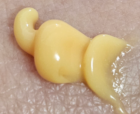
What is Ectoin?
Ectoin (aka ectoine) is a naturally occurring amino‑acid derivative classified as an extremolyte. A fancy term for a molecule built for survival. It’s produced by microorganisms that live in extreme environments like salt lakes, deserts, and hot springs. Ectoin acts as a cellular bodyguard, protecting against dehydration, UV radiation, heat, and oxidative stress.
I did write a previous blog about this ingredient. As I found it to be one of the most promising and affordable ingredient on the horizon. It has been a long wait for it to starting hitting the beauty shelves with earnest.
Now, I am not saying that any ingredient is going to take over for genetics or surgery. That being said, products in the “drugstore” are essential in daily life. Different regions have had used natural ingredients for centuries for different purposes. Those things have help to extended or improve lives. Basically, I am saying these products or ingredients do something.
What does Ectoin do for your skin?
Documented skin benefits include:
One of my favorites is a reduction of the TEWL – transepidermal water loss. I haven’t seen studies with this ingredient used for the under eye only. That is the place that a lot of experience TEWL. However, Ectoin is promising in the fact that it stabilizes the stratum corner when it is under stress. This keeps that skin more hydrated.
Barrier protection and repair of the skin is another of its attributes. This is wonderful for compromised or inflamed skin. Keeping the skin smooth and helping with anti-inflammation. Yes, there are other ingredients that do these same things. Ectoin is safe for use on even infant skin. I like to see this as that means more people can be included in the use of this ingredient.
Not to mention, it is also adds protection against environmental stressors such as UV radiation and pollution. It is not a UV filter. No, it can’t be used for a substitute for sun screen.
How does it work?
Ectoin binds surrounding water molecules to form a structured hydration shell around proteins, enzymes, cell membranes and DNA. Formulators call this the ectoin hydro-complex.
Are you going to remember this? Probably no. The main factor is the formula is hydration in perhaps a different way than some other hydrators. It seems to be exceptional at it. Because unlike other humectants that mainly attract water to the skin, ectoin protects existing cellular hydration and structure. This is why it performs well under extreme conditions. Like harsh climates (cold, dry, high-UV), over-exfoliated skin, stressed skin. Stressed skin could also be skin that is exposed to other active ingredients such as retinoids or acids.
Hyped up ingredients with no backing – this one has it
This is not one of those ingredients. There are studies and you know I will bring those to you.
A systematic review (2022) of topical ectoin formulations found consistent improvements in skin dryness, pruritus, and barrier function in patients with atopic dermatitis, including children, with good tolerability at 5.5–7% concentrations.
Now, you don’t even need those percentages for other benefits. A randomized, double‑blind, placebo‑controlled trial (2025) combining topical ectoin with sodium hyaluronate showed statistically significant improvements in hydration, wrinkle depth, radiance, elasticity, and TEWL over 4–8 weeks.
I am not going to try and tell you it was a long enough trial to state that it is the best thing for anti-aging. Time is going to be the only thing to tell us if that is true. I am going to say this is a very promising ingredient. That I am going to add to my routine and I already have.
Gold Standard
What is the most studied skin care ingredient with exceptional results? Sometimes called the gold standard of skin care. You guess it, Retin-A.
Retin-A and other members of the Retinoid family are used in skincare because it works. The issue with this family is that they can be very harsh on skin at first. Some people never last long enough with its use to see benefits. They can not stand the redness, the flaky skin and the sensitivity.
In the first study, there was mention of the study with Ectoin and its effectiveness and use on retinoid stress inducted skin. It played very well in the sand box with the Retinoid family. There aren’t as many ingredients out there that can do that.
And it does not neutralize retinoids, or slow receptor binding, or reduce collagen stimulation or “Cancel out” retinoid efficacy. So, what does that mean for you and me? It means you can use it with your Retinoids routine. Hell, you may even be able to stay on your Retin-A with more regularity than you did before. That means more benefit of both ingredients to your skin.
Routine use for Ectoin and Retinoids
Option A: Ectoin before retinoid (most sensitive skin)
- Cleanse
- Light Ectoin Serum
- Retinoid
- Moisturizer
Option B: Ectoin after retinoid (my pick)
- Cleanse
- Retinoid (Retin-A or Tretinoin)
- Light Ectoin Serum/Moisturizer
Ectoin compared with glycerin and HA (Hyaluronic Acid)
Ectoin seems to be friends with most ingredients. I will go into the comparison to other hyped up barrier protection ingredients in a future post.
Products with Ectoin for $10 to $35
What you really want to know is what fairly affordable products have this ingredient? That are reasonable affordable. These are products with Ectoin that is higher on the ingredient list. All of these percentages were used in studies. I didn’t mention all of the studies that on this ingredient. With the exception of Good Molecules. I like this brand and find they produce good skincare at very reasonable prices.
Product | Price range | Ectoin position | Ectoin % | Texture |
|---|---|---|---|---|
| INKEY List Ectoin Serum 1 fl oz | ~$15 | Top 5 | 2% | Milky serum |
| Prequel 5% Ectoin Cream 1.7 fl oz | ~$25 | Top 3 | 5% | Cream |
| Prequel Retinal Renew .1% and .2% Ectoin Cream 1.7 fl oz | ~$29 – $35 | Top 8 | ? (I reached out and will update when I get an answer) | Gel Cream |
| Good Molecules Niacinamide + Ectoin 1 fl oz | ~$8–12 | High | Not disclosed | Serum |
| Paula’s Choice 7% Booster .67 fl oz | ~$35+ | #2 | 7% |
Formulation plays into that too. That is why I gave you the texture as well. The only one of these that I haven’t tried is Paula’s Choice 7% Booster for any length of time. I know a popular Youtube doctor, Dr Dray seems to like it. I would say it is probably a good product and I will finish trying it later on. Only have one face.
Paula’s Choice products that I have tried, with the exception of the toner, lead to peeling under my makeup. Now that is just me and my skin. Your experiences may be different. I do believe Paula’s Choice is a great brand and trustworthy. I will use this in my night routine when I am done with the others.
Prequel Retinal Renew 0.2% Retinaldehyde Gel

I decided I wanted to try a Ectoin product that I could use in both my day and night routine. That way I can tell you if it really does help with sensitive skin. Only in relation to the product that I used.


The product that I tried for this is my favorite so far is from Prequel. It isn’t just for the Ectoin. Because it is combined with a member of the Retinoid Family. It is the Prequel Retinal Renew 0.2% Retinaldehyde Gel. This gel comes in a 0.1% version as well.
I also went so far as to use it at night with my Retin-A. My face did feel a little tight in the morning. I didn’t have irritation. This is not a practice that I will use routinely. I feel like it may at some time make my skin too sensitive.
My routine will continue to have this Prequel Retinal Renew 0.2% Retinaldehyde Gel in the morning on most days. I will use the Prequel Reactive Skin Solutions 5% Ectoin Cream at night with my Retin-A. As I feel that will be more protect of my skin.
I am excited to see where this use of these products for a longer period of time will take my skin. I am currently also doing face peels every 6 weeks. It is time for my 2nd peel. We will see if this product also help with irritation from those peels. More to come.
Have you tried anything with Ectoin in it? How was it? How long did you use it? Leave a comment.
Estimated reading time: 8 minutes

Leave a Reply